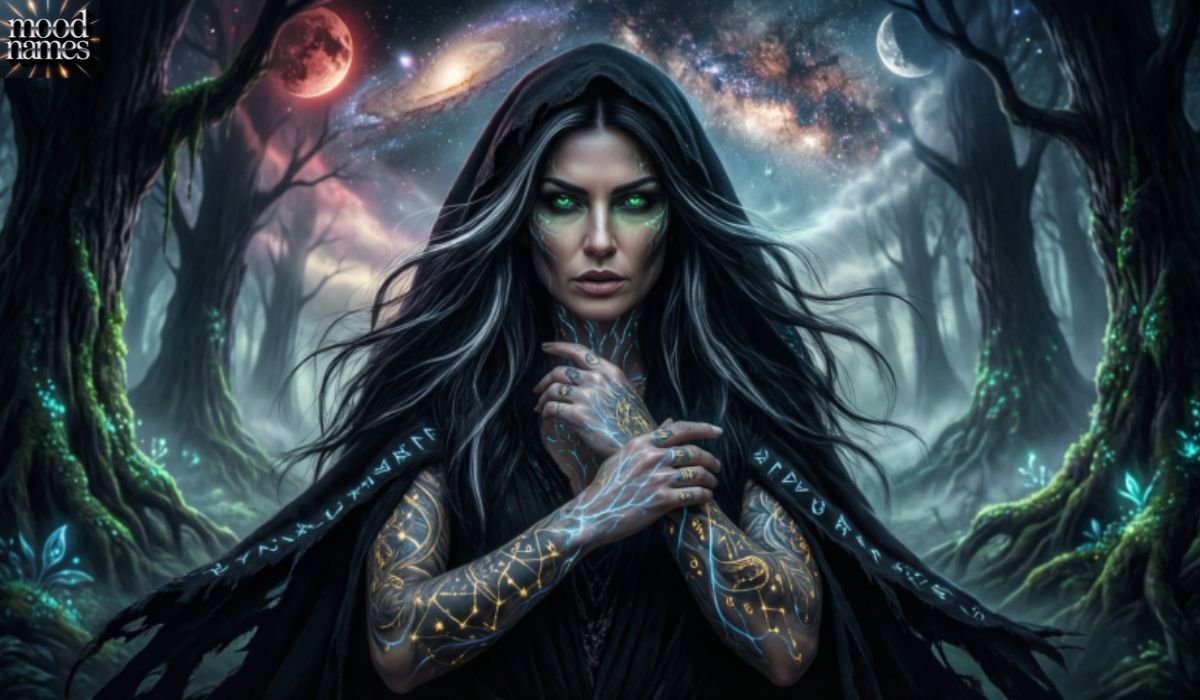
A warlock’s name can reveal more than her magical power: it can hint at a broken promise, a dangerous patron, or a secret she protects. For a female warlock in a novel, tabletop campaign, or game, decide first whether her name was inherited, chosen, or bestowed after a pact. A gentle birth name paired with an ominous title often creates more tension than two dark-sounding words. The 32 options below range from restrained to theatrical, so you can match the sound to her allegiance and personality.
How to use this list: Shortlist the names that suit your setting, then adapt their spelling or add a meaningful title to make the choice your own.
32 female warlock names to try
A pact can shape a name in several ways. Ashveil might be an earned identity after surviving a fire, while Vowkeeper suggests an obligation she cannot abandon. Decide who bestowed the name: her family, a patron, or the people she protects. The answer can reveal whether she accepts the pact or resents it.
- Veyra Ashveil
- Morrin Nightward
- Selka Duskthorn
- Nyvelle Crowmere
- Ilyra Hollowflame
- Corvena Cindermark
- Thessa Hexbrook
- Ravelle Umbravale
- Zoryn Grimwillow
- Mireth Starbane
- Elvara Vowkeeper
- Sablea Frostfen
- Orith Thornscribe
- Caldria Moonforge
- Nerys Ravenholt
- Velka Mistwarden
- Ismera Ashveil
- Druvane Nightward
- Avarin Duskthorn
- Kestra Crowmere
- Veyra Hollowflame
- Morrin Cindermark
- Selka Hexbrook
- Nyvelle Umbravale
- Ilyra Grimwillow
- Corvena Starbane
- Thessa Vowkeeper
- Ravelle Frostfen
- Zoryn Thornscribe
- Mireth Moonforge
- Elvara Ravenholt
- Sablea Mistwarden
Give the character a private name as well as a formal identity only when both matter to the story. A patron might insist on a ceremonial title, while a childhood friend calls her Veyra. Introduce that relationship once so readers understand that both names belong to the same person.
Pact-driven character scenes for a warlock
Use these story prompts to test whether a name carries the right character and atmosphere:
- A scholar trades her true name for the ability to read a forgotten language.
- A village healer conceals her patron’s mark beneath ordinary gloves.
- A royal advisor uses a feared title to protect a vulnerable sibling.
- An apprentice inherits the obligations of a pact she never signed.
- A rebel keeps her birth name secret from the entity pursuing her.
How to make a warlock name feel formidable
Begin with a single design constraint: location, role, mood, or a defining object. For female warlock names, choose one and write a one-line brief such as ‘someone known for keeping a dangerous promise.’ Generate five names from that brief, cross out the two that require pronunciation help, and test the remaining three in a real sentence. This process reduces accidental lookalikes and gives each name a reason to exist.
Balancing magical titles and everyday names
Contrast public identity with private identity. A ceremonial name can be longer, but friends may use a short form. Readers need to recognize both versions without having to memorize two unrelated words. If a name already contains a striking image, avoid attaching another equally strong image that fights for attention. A calm suffix can make a dramatic opening sound more powerful.
Naming a patron-bound spellcaster without copying an existing franchise
Look at names already used in your project. If three major characters all begin with ‘V’ and end with ‘-ra,’ vary the rhythm before you draft further chapters. Use a handwritten roster or a small spreadsheet with spelling, syllables, narrative function, and first appearance. In shared worlds or multiplayer games, check platform rules and name availability before committing to a final choice.
What to test before choosing
Check whether the name suggests her patron, whether allies would shorten it, whether enemies could use it as an accusation, and whether the sound fits a whispered spell as well as ordinary dialogue.
From pact to personal name: a warlock naming exercise
Start with this premise: a warlock who protects a coastal town by binding a dangerous storm inside a bell. First choose the emotional register: authority mixed with a hint of danger. Second pick an opening from this article—Sablea—because it will be easy to recognize. Third attach a grounded detail, such as Grimwillow, only if the world would naturally use descriptive family names or titles. Read Sablea Grimwillow aloud. If the scene is fast, the character may introduce themselves simply as Sablea.
Next write three one-sentence introductions: one said by a close friend, one by a stranger, and one by an adversary. Keep the name that sounds convincing in all three. This matters because a character name should work in action, not just on a list. If a stranger would ask for clarification every time, simplify the spelling and preserve the strongest syllable.
Frequently asked questions
Can a female character be called a warlock?
Yes. In your own fantasy setting, warlock can describe a woman whose magic comes from a pact. If you are writing for an existing game or fictional universe, follow its terminology and character rules.
How do I make a warlock name sound powerful?
Choose a firm rhythm and a detail that suggests her magic or obligations. Veyra Ashveil sounds secretive; Elvara Vowkeeper suggests someone defined by an oath. Let actions establish her power instead of stacking intimidating titles.
Should a warlock have a surname?
A surname is optional. Use a family name for ancestry, an earned title for reputation, or a short single name for fast dialogue. Keep the form consistent with other characters in the same setting.
Are these names from a particular game?
No. These are creative suggestions for original characters, not an official game list or a claim of historical origins.
Related naming guides on MoodNames
For broader inspiration, see our Warlock Names guide. For a different style of character, compare the Witch Names ideas.
Final thoughts
The strongest female warlock names do not depend on stuffing a keyword into every heading or inventing a grand meaning for each syllable. Choose a style, collect a shortlist, test pronunciation, and connect the winner to something your character or project actually does. That approach gives readers usable inspiration and makes the guide worth returning to when they need a fresh variation.
Further reading
For more about the craft behind fictional names, read Sense and Serendipity: Some Ways Fiction Writers Choose Character Names by Sharon Black and Brad Wilcox. This is background reading, not the source of the invented suggestions above.