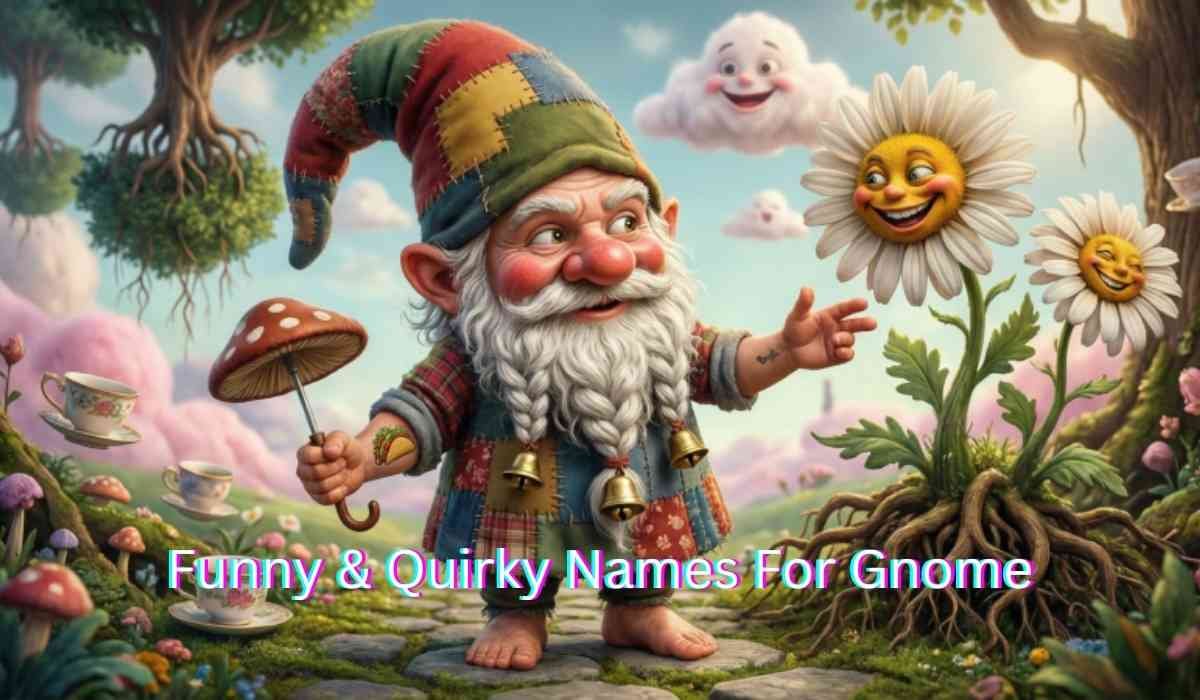
A tiny hat, oversized boots, and a stubborn personality can do most of the storytelling for a garden gnome. The name supplies the final comic detail. For funny gnome names, pair a familiar sound with a hobby, an object, or an unfortunate mishap: a tinkerer could have an overly grand title, while a shy gardener might be known for a very silly mistake. Below are 32 ideas for decorations, fantasy characters, and games, plus ways to keep the humor affectionate and memorable.
How to use this list: Pick a few names and test them in a scene, caption, or character introduction before making a final choice.
32 funny gnome names to try
A garden ornament already supplies useful clues. A gnome carrying a pot might become Bumble Pot sniffer; a crooked hat suggests Tater Wobble hat. Try placing a small name card beside the ornament and see whether the joke is obvious without an explanation. Short names are easier to read from a path.
- Bumble Potsniffer
- Pip Mossboots
- Nibble Buttonnose
- Tater Wobblehat
- Wiggle Crumbwhistle
- Muffin Snickerdust
- Fizz Puddlewick
- Gizmo Teacup
- Binky Gearsocks
- Puddle Tiddlefern
- Toffee Puddingcap
- Pickles Dandelion
- Wobbin Bumblepot
- Sprocket Noodlebeard
- Noodle Twiggletoe
- Tumble Potsniffer
- Puff Mossboots
- Biscuit Buttonnose
- Dibble Wobblehat
- Tink Crumbwhistle
- Bumble Snickerdust
- Pip Puddlewick
- Nibble Teacup
- Tater Gearsocks
- Wiggle Tiddlefern
- Muffin Puddingcap
- Fizz Dandelion
- Gizmo Bumblepot
- Binky Noodlebeard
- Puddle Twiggletoe
- Toffee Potsniffer
- Pickles Mossboots
For a story or game, tie the joke to a recurring habit instead of repeating the punchline. Sprocket Noodlebeard could invent clever machines that always have one unnecessary attachment. Give him a useful skill and a sincere goal so the audience remembers a character rather than only an amusing label.
Gnome hobbies and mishaps that create funny names
Give each name a story by connecting it to one of these specific situations:
- A gardener becomes famous for growing one enormous mushroom.
- An inventor insists every broken machine is an artistic success.
- A baker accidentally wins a village race while delivering pies.
- A watchman falls asleep and is given a teasing but affectionate nickname.
- A collector keeps losing buttons from an elaborate waistcoat.
Garden gnome names that feel friendly
Begin with a single design constraint: location, role, mood, or a defining object. For funny gnome names, choose one and write a one-line brief such as ‘someone known for keeping a dangerous promise.’ Generate five names from that brief, cross out the two that require pronunciation help, and test the remaining three in a real sentence. This process reduces accidental lookalikes and gives each name a reason to exist.
Inventor and tinkerer naming patterns
Contrast public identity with private identity. A ceremonial name can be longer, but friends may use a short form. Readers need to recognize both versions without having to memorize two unrelated words. If a name already contains a striking image, avoid attaching another equally strong image that fights for attention. A calm suffix can make a dramatic opening sound more powerful.
How to keep a joke name funny after the first scene
Look at names already used in your project. If three major characters all begin with ‘V’ and end with ‘-ra,’ vary the rhythm before you draft further chapters. Use a handwritten roster or a small spreadsheet with spelling, syllables, narrative function, and first appearance. In shared worlds or multiplayer games, check platform rules and name availability before committing to a final choice.
Choosing a name that actually fits
Read the name aloud beside the gnome’s appearance, make sure the punch line is easy to understand, and choose something that will still be fun after several scenes rather than only once.
Match a garden gnome’s name to its personality
Start with this premise: a garden gnome inventor who accidentally builds a mechanical watering can that tells jokes. First choose the emotional register: warm humor and cheerful sound patterns. Second pick an opening from this article—Pickles—because it will be easy to recognize. Third attach a grounded detail, such as Gearsocks, only if the world would naturally use descriptive family names or titles. Read Pickles Gearsocks aloud. If the scene is fast, the character may introduce themselves simply as Pickles.
Next write three one-sentence introductions: one said by a close friend, one by a stranger, and one by an adversary. Keep the name that sounds convincing in all three. This matters because a character name should work in action, not just on a list. If a stranger would ask for clarification every time, simplify the spelling and preserve the strongest syllable.
Frequently asked questions
What is a funny name for a gnome?
Bumble Potsniffer, Tater Wobblehat, and Sprocket Noodlebeard are playful choices. Pick the joke that fits your gnome’s hobby, appearance, or recurring mishap.
Can gnomes have surnames?
Yes, in an original fantasy setting. A surname can come from a family craft, a garden landmark, or an earned nickname. Decide whether relatives share it or each gnome earns a personal second name.
What names suit garden gnomes?
Pip Mossboots suits a quiet garden helper; Pickles Dandelion suggests a cheerful troublemaker. Match the name to the ornament’s pose, tools, or location for a joke visitors can recognize.
Can I use these in a fantasy game?
You can adapt them as character ideas, subject to the game’s naming rules and availability. These are creative suggestions, not an official or exclusive game name list.
Related naming guides on MoodNames
For broader inspiration, see our Gnome Names guide. For a different style of character, compare the Goblin Names ideas.
Final thoughts
The strongest funny gnome names do not depend on stuffing a keyword into every heading or inventing a grand meaning for each syllable. Choose a style, collect a shortlist, test pronunciation, and connect the winner to something your character or project actually does. That approach gives readers usable inspiration and makes the guide worth returning to when they need a fresh variation.
Further reading
For more about the craft behind fictional names, read Sense and Serendipity: Some Ways Fiction Writers Choose Character Names by Sharon Black and Brad Wilcox. This is background reading, not the source of the invented suggestions above.