
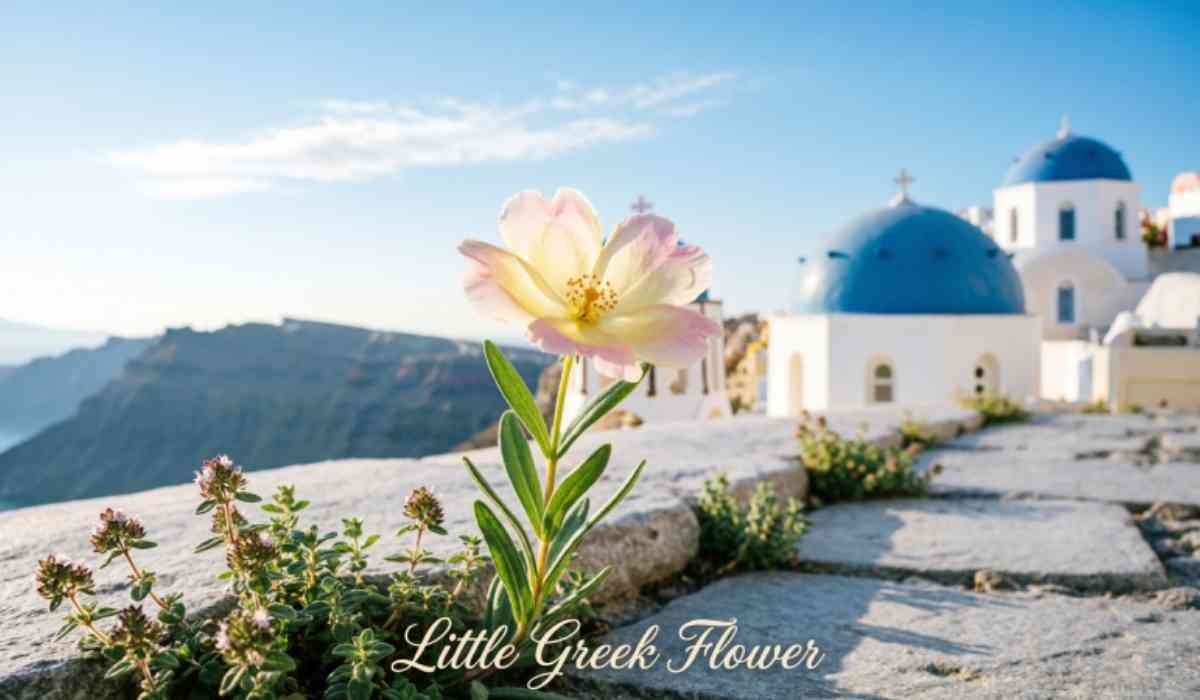
The little Greek flower has quietly carried deep meaning for thousands of years. These small blooms, scattered across hillsides and ancient ruins, tell stories of love, loss, and hope. Flowers in Greek culture weren’t just pretty things. They were sacred, emotional, and deeply tied to everyday life.
Walk through Greece today and you’ll still find wildflowers pushing through rocky soil, unbothered by heat or drought. That quiet persistence is part of what makes Greek flower symbolism so powerful. These blooms connect the ancient world to the present in a way that feels completely natural and honest.
Little Greek Flower Meaning
The meaning of Greek flowers goes far beyond decoration. Each bloom carried a specific message, whether placed on a grave, woven into a crown, or left at a temple. Greeks read flowers the way we read words today.
Even the smallest petal had weight. Flowers representing love and hope were chosen carefully for rituals and celebrations. A single wildflower could say what no speech could. That tradition still lives quietly in Greek villages today.
Key meanings behind Greek flowers:
- 🌸 Rose = love and beauty (linked to Aphrodite)
- 🌼 Daisy symbolism = innocence and new beginnings
- 🌺 Anemone flower meaning = grief, remembrance, and fragile beauty
- 🌿 Laurel = victory and honor
- 💐 Hyacinth = sorrow and rebirth
| Flower | Core Meaning | Associated With |
|---|---|---|
| Rose | Love | Aphrodite |
| Anemone | Grief & Beauty | Adonis myth |
| Daisy | Innocence | Spring festivals |
| Laurel | Honor | Heroes & gods |
| Hyacinth | Sorrow & Rebirth | Apollo |
Read More: How Old Is Fanum? Full Biography, Personal Life Facts
Greek Flower Symbolism
Greek flower symbolism shaped how people communicated emotion in public and private life. Flowers appeared in art, poetry, and ceremony constantly. Nothing was random. Every bloom chosen had a reason.
The flower symbolism in Greece also reflected the seasons and the gods. Spring flowers meant renewal. Dark flowers meant mourning. This symbolic language was so precise that Greeks could express entire feelings through a simple bouquet.
How flowers were used symbolically:
- Woven into garlands for festivals and weddings
- Placed on altars as offerings to gods
- Worn as crowns by athletes and poets
- Used in funeral rites to honor the dead
- Given as gifts to express love or respect
| Occasion | Flower Used | Symbolic Purpose |
|---|---|---|
| Wedding | Rose, myrtle | Love and fertility |
| Funeral | Anemone, violet | Grief and remembrance |
| Victory | Laurel, olive | Honor and glory |
| Religious festivals | Hyacinth, lily | Devotion to gods |
Flowers in Greek Mythology
Flowers in ancient Greece weren’t just earthly things. The gods created them, wept them into existence, or transformed people into them. Greek mythology and nature were completely inseparable in the ancient imagination.
Almost every major deity had a flower connected to their story. These mythological flower stories explained why certain blooms existed and what power they carried. It made every field of wildflowers feel like a page from a divine story.
Famous flowers tied to Greek myths:
- 🌺 Anemone = born from Aphrodite’s tears for Adonis
- 🌸 Narcissus = grew where the vain youth fell
- 💜 Hyacinth = born from Apollo’s grief
- 🌿 Mint = once the nymph Minthe, transformed by Persephone
- 🌼 Sunflower = linked to the nymph Clytie pining for Apollo
| Myth | Flower Created | Emotion Behind It |
|---|---|---|
| Aphrodite & Adonis | Anemone | Grief and love |
| Narcissus | Narcissus flower | Vanity and tragedy |
| Apollo & Hyacinth | Hyacinth | Loss and devotion |
| Persephone & Minthe | Mint | Jealousy and power |
Anemone and Aphrodite Story
The Aphrodite and Adonis myth is one of the most heartbreaking in all of Greek mythology flowers. Adonis, a mortal hunter beloved by Aphrodite, was killed by a wild boar. Where his blood fell, red anemones bloomed.
That story gave the anemone flower meaning its permanent shape. It became a flower as a symbol of remembrance, delicate yet striking, just like the love it represents. Even today, seeing anemones growing wild in Greece feels like walking through that old story.
What the anemone represents:
- Fragile beauty that doesn’t last
- Love that survives even death
- The connection between nature and history
- Grief turned into something visible and real
- Flowers as symbols of remembrance in Greek tradition
Greek Wildflowers and Nature
Greek wildflowers grow in places most plants wouldn’t dare try. Rocky hillsides, cliff edges, ancient ruins, and dry coastal paths are all covered in color every spring. Mediterranean blooms are tough, vivid, and completely unpretentious.
Native flowers of Greece include hundreds of species found nowhere else on earth. The sun-drenched fields of Greece burst into color between February and May, drawing botanists, artists, and travelers who can’t quite believe what they’re seeing.
Common Greek wildflowers you’ll actually spot:
- 🌸 Poppies covering hillsides in red waves
- 🌼 Chamomile growing between ancient stones
- 💜 Wild orchids hiding in mountain meadows
- 🌿 Thyme flowers covering rocky slopes
- 🌺 Anemones appearing after the first rains
Regions known for wildflower abundance:
| Region | Notable Wildflowers | Best Season |
|---|---|---|
| Crete | Wild orchids, anemones | March to April |
| Mount Olympus | Alpine wildflowers | May to June |
| Peloponnese | Poppies, chamomile | February to April |
| Cyclades | Sea daffodils, rock plants | Spring |
Beauty of Simplicity in Nature
The beauty of simplicity in nature is something Greece teaches without trying. A single anemone in a crack in old marble says more than a whole arranged bouquet. Life lessons from flowers come quietly when you slow down enough to notice.
Greeks understood this naturally. They didn’t need elaborate gardens to appreciate blooms. The flowers growing in rocky landscapes were already doing something remarkable, and that was enough. Simple, resilient, honest beauty is still the most lasting kind.
Simple truths the little Greek flower teaches:
- You don’t need perfect conditions to thrive
- Small things carry real symbolic weight
- Beauty doesn’t require complexity
- Resilience in nature is worth admiring and learning from
- The symbolic meaning of resilience lives in every wildflower
Ancient Greek Floral Traditions
Historical floral traditions in Greece were woven into daily life, religion, and politics. Flowers weren’t seasonal decorations. They were year-round communication tools used by everyone, from farmers to philosophers.
Flowers in ancient Greece appeared in Homer’s writing, on painted pottery, and carved into temple friezes. These traditions shaped European flower symbolism for centuries. Much of what Western culture associates with flowers today started in ancient Greece.
Ancient floral traditions still practiced or remembered:
- Garland-making for festivals (still done in villages)
- Offering flowers at shrines and chapels
- Using specific blooms at weddings and baptisms
- Herbal flower bundles hung above doorways
- Seasonal flower markets in town squares
Resilience of Greek Blooms
Wildflowers in Greece don’t ask for much. They grow through cracks in stone walls, pop up after wildfires, and bloom after summer droughts. The symbolic meaning of resilience is written right into how they survive.
This resilience isn’t just inspiring as a metaphor. It’s a real biological fact. Mediterranean blooms have adapted over thousands of years to survive heat, poor soil, and dry summers. They’re genuinely tough, and that toughness is part of their quiet beauty.
Why Greek wildflowers are naturally resilient:
- Deep root systems that find hidden water
- Small petals that reduce water loss
- Dormant seeds that wait years for rain
- Thick waxy coatings on leaves
- Adapted to bloom quickly after fires or floods
Healing Plants of Greece
Traditional herbal remedies in Greece go back thousands of years. Hippocrates, the father of medicine, documented hundreds of healing plants in ancient Greece in his writings. Many of those plants are still used in Greek households today.
Traditional herbal medicine in Greece relied heavily on flowering plants. Chamomile, thyme, sage, and oregano weren’t just kitchen herbs. They were treatments for fever, digestion, anxiety, and wounds. Natural remedies from Greek plants are now being studied seriously by modern researchers.
Well-known healing flowers and herbs from Greece:
- 🌼 Chamomile = calming, digestive support
- 🌿 Thyme = antibacterial, respiratory health
- 💜 Lavender = anxiety relief and sleep
- 🌸 Rose hip = vitamin C and immune support
- 🍃 Sage = memory and anti-inflammatory
| Plant | Traditional Use | Modern Research Status |
|---|---|---|
| Chamomile | Calming stomach issues | Well-supported |
| Thyme | Fighting infection | Strong evidence |
| Sage | Memory support | Active research ongoing |
| Lavender | Reducing anxiety | Well-documented |
Organic Flower Farming in Greece
Organic farming in Greece has grown steadily as more farmers return to traditional methods their grandparents used. Eco-friendly flower cultivation is becoming a real economic force, especially in rural regions where land is still clean and relatively untouched.
Sustainable flower cultivation matters here because Greece’s biodiversity conservation depends on it. When farmers protect native wildflower habitats instead of replacing them, entire ecosystems benefit. Biodiversity conservation in Greece keeps rare species alive while also supporting local tourism and herbal export markets.
What makes Greek flower farming stand out:
- Low pesticide use in traditional farming regions
- Many farms certified organic or transitioning
- Strong demand for native flowers of Greece in European markets
- Farmers preserving rare varieties not grown elsewhere
- Eco-friendly farming practices passed down through generations
Conclusion
The little Greek flower is more than something pretty growing by the road. It carries centuries of meaning, mythology, and memory inside every petal. Greek flower symbolism reminds us that the smallest things in nature often hold the deepest stories, and Greece has always known that better than most places.
From flowers in Greek culture to wild anemones blooming after the first autumn rain, these blooms connect us to something much older than we are. They’re a reminder that beauty, resilience, and meaning don’t need to be loud or complicated. Sometimes a small flower growing through a crack in old stone says everything worth saying.