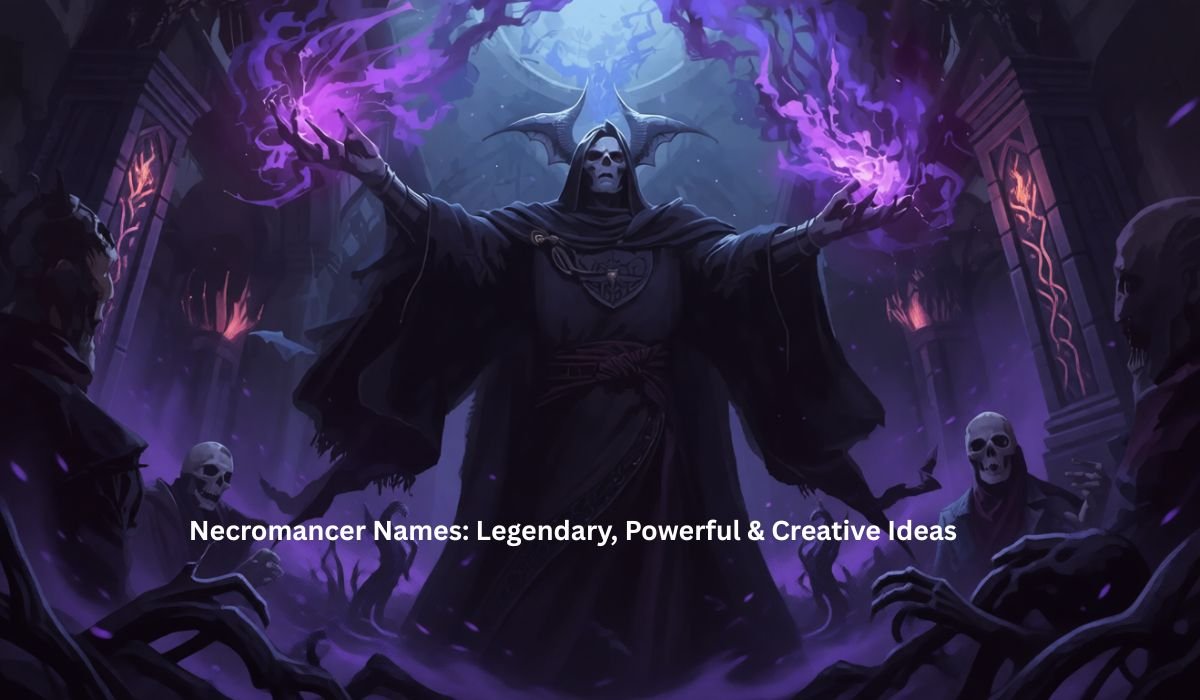
A necromancer becomes frightening when the audience understands what the character wants, not merely because the name contains a skull or shadow. An oath-breaking historian, a grieving ruler, and a ruthless collector of forbidden spells should not sound identical. The following evil necromancer names are designed for distinct types of villains, from cold and ceremonial to deceptively ordinary. Use their titles and surnames to hint at motive, history, or the way other characters describe their crimes.
How to use this list: Pick a few names and test them in a scene, caption, or character introduction before making a final choice.
32 evil necromancer names to try
Choose the villain’s goal before the title. A necromancer who wants to preserve a lost kingdom might call himself a keeper, while his enemies call him a thief of the dead. The difference reveals opposing viewpoints. A name becomes more effective when the reader eventually understands the event that created it.
- Vorrak Gravebound
- Malvera Boneweaver
- Nethros Cryptwarden
- Zerath Ashcrown
- Morvane Mourningveil
- Kharis Hollowking
- Velrith Dreadmarrow
- Sarth Nightrelic
- Eldra Blacktomb
- Ravion Soulshroud
- Drazek Deathmire
- Ormyr Paleoath
- Noxara Rotspire
- Vesh Dusksepulcher
- Tharion Cinderskull
- Calvex Gravebound
- Ervane Boneweaver
- Vorlis Cryptwarden
- Demer Ashcrown
- Xyra Mourningveil
- Vorrak Hollowking
- Malvera Dreadmarrow
- Nethros Nightrelic
- Zerath Blacktomb
- Morvane Soulshroud
- Kharis Deathmire
- Velrith Paleoath
- Sarth Rotspire
- Eldra Dusksepulcher
- Ravion Cinderskull
- Drazek Gravebound
- Ormyr Boneweaver
Separate the person’s birth name, public title, and forbidden order. Introduce each only when the scene needs it. One memorable title is usually enough; a string of skull, blood, doom, and shadow words can make a serious antagonist sound like a parody. Let an ordinary personal detail make the threat feel closer.
Villain motivations behind a necromancer’s name
Give each name a story by connecting it to one of these specific situations:
- An archivist raises the dead to recover a lost historical testimony.
- A former healer believes every death is a mistake that must be reversed.
- A ruler conceals an undead court behind the appearance of a thriving city.
- A forbidden scholar adopts the title given by terrified enemies.
- An apprentice refuses the grandiose name inherited from a cruel master.
The villain name should hint at motive, not only evil
Begin with a single design constraint: location, role, mood, or a defining object. For evil necromancer names, choose one and write a one-line brief such as ‘someone known for keeping a dangerous promise.’ Generate five names from that brief, cross out the two that require pronunciation help, and test the remaining three in a real sentence. This process reduces accidental lookalikes and gives each name a reason to exist.
Avoiding familiar dark-fantasy clichés
Contrast public identity with private identity. A ceremonial name can be longer, but friends may use a short form. Readers need to recognize both versions without having to memorize two unrelated words. If a name already contains a striking image, avoid attaching another equally strong image that fights for attention. A calm suffix can make a dramatic opening sound more powerful.
Naming the title, the person, and the forbidden order
Look at names already used in your project. If three major characters all begin with ‘V’ and end with ‘-ra,’ vary the rhythm before you draft further chapters. Use a handwritten roster or a small spreadsheet with spelling, syllables, narrative function, and first appearance. In shared worlds or multiplayer games, check platform rules and name availability before committing to a final choice.
Choosing a name that actually fits
Decide whether the name is self-chosen or assigned by enemies; relate it to an actual motive; test its use in a whispered rumor and formal proclamation; and avoid stacking too many dark-sounding syllables.
Give a necromancer a motive before a title
Start with this premise: a necromancer villain who raises an army to recover an erased chapter of history. First choose the emotional register: menace tempered by a credible personal motive. Second pick an opening from this article—Ormyr—because it will be easy to recognize. Third attach a grounded detail, such as Blacktomb, only if the world would naturally use descriptive family names or titles. Read Ormyr Blacktomb aloud. If the scene is fast, the character may introduce themselves simply as Ormyr.
Next write three one-sentence introductions: one said by a close friend, one by a stranger, and one by an adversary. Keep the name that sounds convincing in all three. This matters because a character name should work in action, not just on a list. If a stranger would ask for clarification every time, simplify the spelling and preserve the strongest syllable.
Frequently asked questions
What is a good evil necromancer name?
Vorrak Gravebound suggests a figure tied to a terrible oath, while Malvera Boneweaver suggests precise, unsettling magic. Choose the name that fits your villain’s methods and motives.
Can a necromancer name sound elegant?
Yes. An elegant name can make a villain more unsettling when their polished manners contrast with their actions. Use one restrained surname or title rather than making every syllable harsh.
Should a villain use a title instead of a surname?
Either can work. A surname helps establish the person before their fall; an earned title shows what others fear about them. Introduce the connection clearly if the story uses both.
Are these names from a mythology?
No. The list contains creative fantasy suggestions and does not assign authentic mythological origins or translations to invented names.
Related naming guides on MoodNames
For broader inspiration, see our 305 Necromancer Names Legendary Powerful Creative Ideas guide. For a different style of character, compare the Warlock Names ideas.
Final thoughts
The strongest evil necromancer names do not depend on stuffing a keyword into every heading or inventing a grand meaning for each syllable. Choose a style, collect a shortlist, test pronunciation, and connect the winner to something your character or project actually does. That approach gives readers usable inspiration and makes the guide worth returning to when they need a fresh variation.
Further reading
For more about the craft behind fictional names, read Sense and Serendipity: Some Ways Fiction Writers Choose Character Names by Sharon Black and Brad Wilcox. This is background reading, not the source of the invented suggestions above.