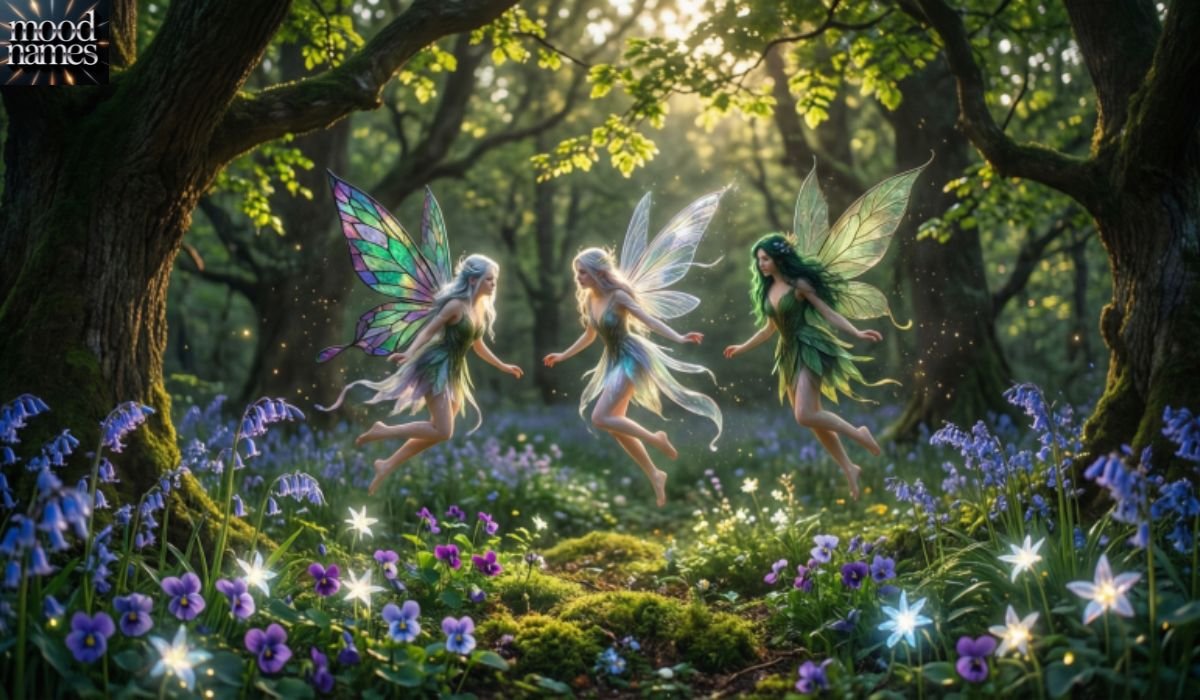
In a fairy tale, a surname can function like a miniature map. It might tell readers which grove a family tends, which seasonal court they serve, or which craft made their ancestors famous. When creating fairy last names, start with a social custom: are surnames inherited, earned through an apprenticeship, or changed when someone joins a new court? The 20 suggestions below offer different textures, from woodland warmth to formal courtly elegance, and work best when your world’s naming rules stay consistent.
How to use this list: Shortlist the names that suit your setting, then adapt their spelling or add a meaningful title to make the choice your own.
20 fairy last names to try
Treat a fairy surname as a clue to belonging. Mosswing could identify a woodland family; Silvercrest could be the name of a court rather than a bloodline. Decide whether spouses, apprentices, or adopted children share the same surname. A consistent rule makes the invented society easier to understand.
- Briarwhisper
- Lunavale
- Petalbrook
- Thistlebloom
- Mosswing
- Silvercrest
- Mistglade
- Dawnmere
- Glimmerlight
- Ashveil
- Wrensong
- Cloudhollow
- Mallowbriar
- Runefall
- Willowthorn
- Starspell
- Honeyroot
- Moonkiss
- Frostshade
- Fernwatch
Try pairing one familiar first name with one textured surname: Mira Briarwhisper, Nola Silvercrest, or Iris Cloudhollow. Avoid repeating the same ending in both halves. Keep the surname intact in dialogue; shortening a family name into a different word can make readers think you introduced another person.
Family histories behind fairy surnames
Use these story prompts to test whether a name carries the right character and atmosphere:
- A moss-gathering family earns a name after saving a woodland settlement.
- Two rival courts share a surname but pronounce it differently.
- An adopted fairy keeps a river name despite moving to the mountains.
- A royal messenger uses a craft surname rather than a noble title.
- A family name becomes taboo after a grove disappears in winter.
Surnames that hint at fairy ancestry
Begin with a single design constraint: location, role, mood, or a defining object. For fairy last names, choose one and write a one-line brief such as ‘someone known for keeping a dangerous promise.’ Generate five names from that brief, cross out the two that require pronunciation help, and test the remaining three in a real sentence. This process reduces accidental lookalikes and gives each name a reason to exist.
Court names versus family names
Contrast public identity with private identity. A ceremonial name can be longer, but friends may use a short form. Readers need to recognize both versions without having to memorize two unrelated words. If a name already contains a striking image, avoid attaching another equally strong image that fights for attention. A calm suffix can make a dramatic opening sound more powerful.
How to pair a fairy surname with a first name
Look at names already used in your project. If three major characters all begin with ‘V’ and end with ‘-ra,’ vary the rhythm before you draft further chapters. Use a handwritten roster or a small spreadsheet with spelling, syllables, narrative function, and first appearance. In shared worlds or multiplayer games, check platform rules and name availability before committing to a final choice.
What to test before choosing
Decide who passes on surnames, whether court and family names differ, how many syllables suit first names, and whether the meaning remains clear without claiming a real folklore origin.
Build a surname from a fairy family’s home
Start with this premise: a fairy archivist whose family protects the names of forgotten forests. First choose the emotional register: wonder, texture and a sense of belonging. Second pick an opening from this article—Cloud—because it will be easy to recognize. Third attach a grounded detail, such as light, only if the world would naturally use descriptive family names or titles. Read Cloud light aloud. If the scene is fast, the character may introduce themselves simply as Cloud.
Next write three one-sentence introductions: one said by a close friend, one by a stranger, and one by an adversary. Keep the name that sounds convincing in all three. This matters because a character name should work in action, not just on a list. If a stranger would ask for clarification every time, simplify the spelling and preserve the strongest syllable.
Frequently asked questions
What makes a surname sound fairy-like?
Natural images and gentle rhythm help: Briarwhisper suggests a hidden woodland family, while Silvercrest sounds suited to a formal fairy court. These are imaginative associations, not traditional translations.
Can fairy last names be one word?
Yes. Compound surnames such as Mosswing, Petalbrook, and Cloudhollow work as single words. Choose one spelling and use it consistently throughout the story.
How do I avoid a name that sounds too complicated?
Pair a short first name with a longer surname, such as Mira Briarwhisper. Read the full name aloud and remove a repeated sound if the combination feels awkward.
Can I use these names in my story?
You can use the suggestions as creative starting points and adapt them to your setting. They are not guaranteed to be unused, so check important names before committing to a commercial project.
Related naming guides on MoodNames
For broader inspiration, see our Fairy Names guide. For a different style of character, compare the Witch Names ideas.
Final thoughts
The strongest fairy last names do not depend on stuffing a keyword into every heading or inventing a grand meaning for each syllable. Choose a style, collect a shortlist, test pronunciation, and connect the winner to something your character or project actually does. That approach gives readers usable inspiration and makes the guide worth returning to when they need a fresh variation.
Further reading
For more about the craft behind fictional names, read Sense and Serendipity: Some Ways Fiction Writers Choose Character Names by Sharon Black and Brad Wilcox. This is background reading, not the source of the invented suggestions above.