
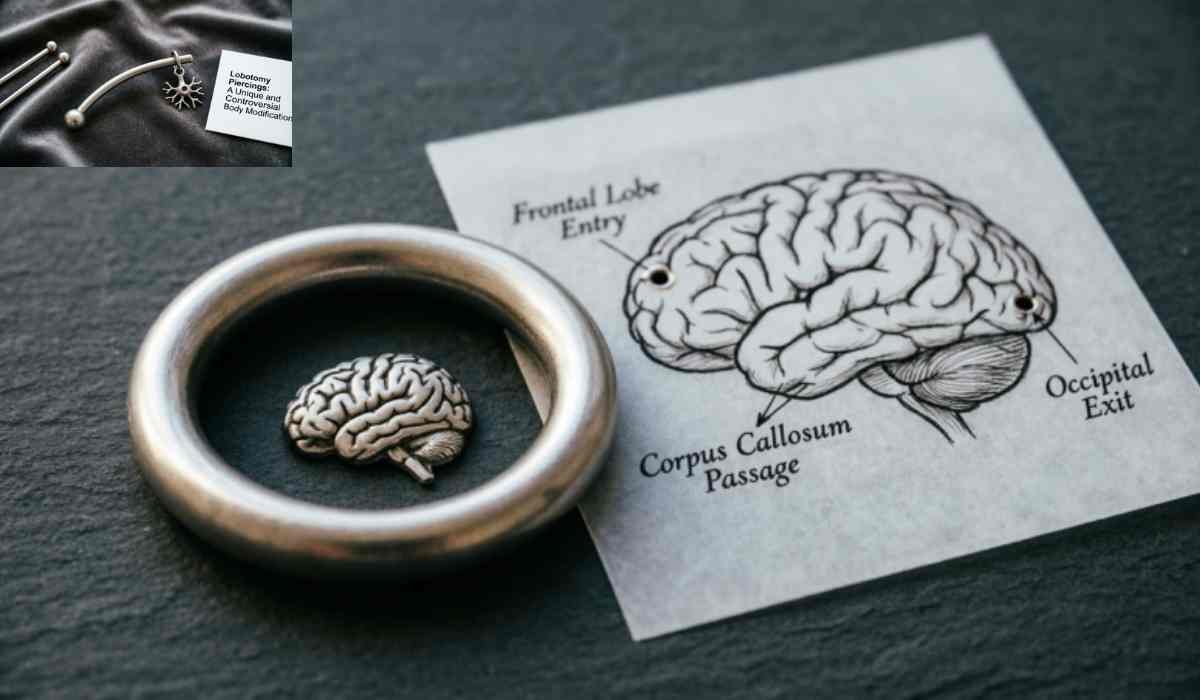
If you’ve been browsing body modification communities lately, you’ve probably stumbled across lobotomy piercings and done a double take. The name alone is enough to stop the scroll. These unique body modification pieces are bold, artistic, and deeply personal, sitting right at the intersection of fashion, identity, and body art self-expression. They’re not for everyone, but that’s kind of the point.
What makes lobotomy piercings so fascinating is the story behind them. They pull from the history of lobotomy procedure, blending dark medical history with modern artistic intention. Whether you’re curious, considering getting one, or just want to understand the piercing culture and trends shaping today’s body art world, this guide walks you through everything you need to know.
What Are Lobotomy Piercings?
Lobotomy piercings are a form of extreme piercing styles placed on the forehead or temple area in patterns that mimic the entry points of a historic surgical procedure. They’re surface piercings done in deliberate, often straight line piercing patterns that create a striking visual statement.
They sit firmly in the category of artistic body piercings rather than standard facial piercings. The design isn’t random. It’s intentional, referencing a specific medical history while making a statement about identity and reclaiming the body. People who choose them often describe the decision as deeply personal.
- Lobotomy piercing = surface or dermal piercing on the forehead or temple
- Done in deliberate straight line piercing patterns or abstract clusters
- Considered one of the more controversial body piercings in the current scene
- Popular in alternative and modern body art trends communities
- Not the same as a standard eyebrow or brow ridge piercing
Quick Overview Table:
| Feature | Details |
|---|---|
| Piercing Type | Surface or dermal piercing |
| Placement | Forehead, temple, or skull area |
| Design Style | Straight line or abstract pattern |
| Pain Level | Moderate to high |
| Healing Time | 6 to 12 months |
| Controversy Level | High due to medical symbolism |
Read More: Exploring Venus with Chub AI: AI Powered Planetary Simulations
The Meaning Behind Lobotomy Piercings
The lobotomy piercing meaning goes far deeper than aesthetics. Many people who get them are processing trauma, reclaiming autonomy, or making a statement about mental health symbolism in art. The location on the head connects directly to ideas about the mind, control, and identity.
For some wearers, it’s an act of defiance. The lobotomy was historically used to suppress people, so wearing the symbol of that procedure as a symbolic body piercing is a way of flipping the narrative. It says: my mind is mine. The lobotomy piercing body modification carries weight that most piercings simply don’t.
- Mental health symbolism in art is a core theme behind these piercings
- Many wearers connect it to reclaiming control over their identity
- Seen as trauma symbolism in art by some in the community
- Others choose it purely for the bold visual aesthetic
- The meaning varies person to person, which adds to its depth
History of the Lobotomy Procedure
To understand this piercing, you need to know the history of lobotomy procedure. Lobotomies were a neurosurgical procedure performed from the 1930s through the 1960s. Doctors would sever connections in the brain’s prefrontal cortex, often using an ice pick-like tool inserted near the temple or forehead.
The procedure was widely used on patients with mental illness, often without proper consent. It’s now considered one of the darker chapters in mental health treatment history. Tens of thousands of lobotomies were performed in the US alone. That painful history is exactly what makes this piercing so loaded with meaning and so rooted in ethical debate in body modification.
- Lobotomies were performed from the 1930s to 1960s
- Entry point was typically near the temple or forehead, the same area as the piercing
- The procedure was often used without proper patient consent
- Now viewed as a deeply controversial chapter in mental health treatment history
- The piercing directly references this historical trauma
History Timeline Table:
| Era | What Happened |
|---|---|
| 1930s | Lobotomy introduced by Egas Moniz |
| 1940s | Walter Freeman popularized the “ice pick” method |
| 1950s | Tens of thousands performed across the US |
| 1960s | Antipsychotic drugs began replacing the procedure |
| Today | Remembered as a dark chapter in psychiatric history |
How Lobotomy Piercings Are Designed
The lobotomy piercing design typically features a series of small surface piercings arranged in a straight line piercing pattern across the forehead or near the temple. The placement and spacing mimic where surgical instruments were historically inserted, giving the design its name and its visual impact.
Some people go for a clean, minimal look with two or three piercings in a precise line. Others opt for more abstract piercing design arrangements that spread across the forehead. The jewelry is usually flat-back titanium or surgical steel to reduce rejection risk. A skilled piercer will map the design to your face shape for the best result.
- Typically 2 to 5 surface piercings in a line or cluster
- Lobotomy piercing design follows the forehead or temple contour
- Flat-back titanium jewelry is most commonly recommended
- Spacing matters: too close increases rejection risk
- Custom designs vary by artist and client preference
Design Styles Table:
| Style | Look | Best For |
|---|---|---|
| Straight line | Clean, minimal, precise | First-timers |
| Curved arc | Follows brow bone | Symmetry lovers |
| Abstract cluster | Scattered, artistic | Experienced wearers |
| Mirrored pair | Both temples | Bold statements |
Common Placement for Lobotomy Piercings
The most common lobotomy piercing placement is along the forehead, just above the eyebrows or near the hairline. Some people choose the temple area instead, which is even closer to the historical lobotomy entry point and adds extra meaning to the piece.
Both forehead piercings and temple piercings carry unique risks because the skin is thin and surface piercings in these areas are more prone to migration and rejection. Placement matters a lot for longevity. Your piercer should assess your skin elasticity and facial anatomy before committing to a spot.
- Forehead piercings: above the brow, center or off-center
- Temple piercings: beside the eye, near the hairline
- Hairline placement offers a more subtle, hidden look
- Center forehead is the most dramatic and visible
- Placement affects both healing time and rejection risk
Why This Piercing Style Is Controversial
The controversy around lobotomy piercings comes from multiple angles. First, the name and visual reference to a traumatic medical history makes some people uncomfortable, particularly those with lived experience of mental health treatment. The ethical debate in body modification here is real and worth taking seriously.
Second, there’s the question of cultural sensitivity in body art. Some argue that aestheticizing a procedure used to harm vulnerable people is disrespectful. Others say that’s exactly why it works as trauma symbolism in art. It’s a genuine conversation within the body modification community, and both sides have valid points. These are the kinds of debates that define ethical concerns in body modification.
- References a painful chapter in psychiatric history
- Some find the aesthetic use of medical trauma disrespectful
- Others see it as powerful reclamation through body art self-expression
- The debate touches on cultural sensitivity in body art broadly
- It’s one of the most talked-about controversial body piercings right now
Symbolism of Lobotomy Piercings
When people talk about symbolism in body art, lobotomy piercings are a fascinating case study. The head is already deeply symbolic: it represents thought, identity, and consciousness. Placing piercings there in a surgical pattern adds layers of meaning that go beyond decoration.
For many wearers, the piercing is a conversation starter about mental health symbolism in art. It can represent surviving a difficult period, reclaiming autonomy, or simply refusing to hide the parts of yourself that others find uncomfortable. It’s one of the most symbolic body piercings you can get, and that meaning makes it powerful.
- Represents reclaiming the mind and identity
- Used as trauma symbolism in art by survivors of mental health struggles
- Prompts real conversations about psychiatric history
- Some wear it as a mark of personal resilience
- The symbolism is personal and varies widely between wearers
Symbolism Breakdown Table:
| Symbol | What It Represents |
|---|---|
| Head placement | Mind, identity, consciousness |
| Line pattern | Surgical precision, historical reference |
| Choice to get it | Autonomy and reclamation |
| Medical reference | Challenging historical oppression |
| Visibility | Open conversation about mental health |
Lobotomy Piercings in Modern Body Art
In the world of modern body art trends, lobotomy piercings are gaining visibility. Social media has pushed alternative body modification ideas into mainstream consciousness, and this style is no exception. Tattoo and piercing conventions now regularly feature artists who specialize in exactly this kind of conceptual work.
They fit into a broader shift in piercing culture and trends toward pieces that tell a story rather than just look pretty. The rise of alternative body art designs has created space for piercings that are as much about meaning as they are about aesthetics. Lobotomy piercings sit comfortably at that intersection.
- Growing in visibility across body mod communities online
- Part of the broader modern body art trends toward conceptual pieces
- Featured at major tattoo and piercing conventions
- Artists specializing in unique piercing styles are in high demand
- Social media has accelerated their spread and discussion
Safety Risks and Health Concerns
Let’s talk honestly about piercing safety. The forehead and temple are challenging areas. The skin is thin, close to bone, and prone to infection risk in piercings. Surface piercings in these spots also have a higher rejection rate than piercings in fleshier areas of the body.
Beyond rejection, there are real risks including scarring, nerve sensitivity, and prolonged healing. Hygiene in body piercings is critical everywhere, but especially here. A poorly placed or improperly cared-for lobotomy piercing can leave permanent marks. That’s why professional body piercer advice isn’t optional. It’s essential before you commit.
- High rejection rate due to thin skin on forehead and temples
- Scarring is a real and common risk if the piercing migrates
- Infection risk in piercings increases near hair and makeup exposure
- Nerve sensitivity near the temple requires extra caution
- Healing can take 6 to 12 months or longer
Choosing a Professional Piercer
This is not the piercing to get at a mall kiosk. Professional body piercer advice is critical for anything involving the forehead or temple. You need someone with specific experience in surface and dermal piercings in complex placements, not just standard lobes and nostrils.
Look for a piercer who’s a member of the Association of Professional Piercers (APP). Check their portfolio specifically for forehead piercings or temple piercings. Ask about their sterilization process and the jewelry they use. Hygiene in body piercings starts with the studio and the person doing the work, so do your homework before you book.
- Always choose an APP-certified or equivalent professional
- Ask to see a portfolio of forehead piercings specifically
- Confirm they use an autoclave for sterilization
- Titanium or implant-grade steel jewelry only for initial piercings
- A good piercer will assess your anatomy before agreeing to proceed
Aftercare Tips for Lobotomy Piercings
Good piercing aftercare tips can be the difference between a healed piercing and a rejected one. The forehead area is tricky because it’s exposed to sweat, hair products, and frequent touching. Staying on top of your routine matters a lot more than it does for, say, an earlobe.
Your piercing aftercare guide should be provided by your piercer, but general rules apply across the board. Saline solution twice a day, hands off unless you’re cleaning, no makeup or skincare products directly on the piercing, and sleep on a clean pillowcase. Infection prevention is mostly about consistency and keeping the area clean without over-cleaning.
- Clean with sterile saline solution twice daily
- Avoid touching the piercing with unwashed hands
- Keep hair products and makeup away from the piercing site
- Infection prevention: change pillowcases frequently during healing
- Don’t rotate or move the jewelry, this disrupts healing
- Watch for signs of rejection: raised skin, jewelry moving closer to the surface
Are Lobotomy Piercings Right for You?
Deciding whether lobotomy piercings are right for you comes down to a few honest questions. Are you drawn to the symbolism, or just the look? Both are valid, but knowing your why helps you commit fully. Are you prepared for a longer healing process and the real possibility of rejection?
If you work in a conservative environment or have skin that tends toward keloids or scarring, this might not be the right fit right now. But if you’re someone who resonates with alternative body modification ideas and wants a piece that carries genuine weight, a lobotomy piercing can be an incredibly meaningful addition to your body art journey. Just go in with both eyes open.
- Consider your personal connection to the lobotomy piercing meaning
- Think about your pain tolerance and commitment to aftercare
- Assess your skin type and healing history with past piercings
- Consider visibility in your professional and social life
- Talk to an experienced piercer before committing
Conclusion
Lobotomy piercings are one of the most layered forms of lobotomy piercing body modification out there. They combine striking visual design with a deep, often personal meaning rooted in mental health symbolism in art and human history. Whether or not they’re for you, it’s impossible to deny that they represent something genuinely thoughtful in the piercing culture and trends conversation.
If you’re seriously considering one, do the research, find the right professional body piercer, and be honest with yourself about your reasons. Body modification at its best is intentional, informed, and personal. A lobotomy piercing, done right and for the right reasons, can be exactly that: a bold, meaningful piece of body art self-expression that tells your story in a way nothing else can.