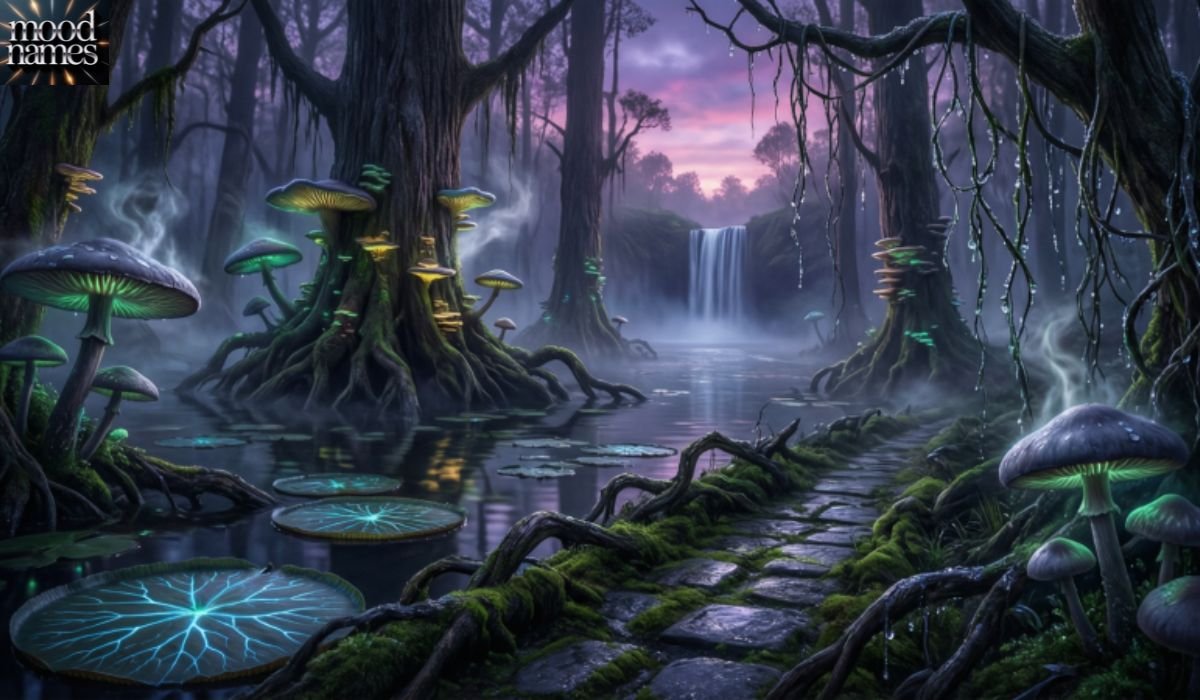
A good swamp name should make your players laugh while still helping them find their way across a fantasy map. A muddy crossing might earn its title from a village joke, a noisy frog colony, or an explorer’s embarrassing mistake. The trick with funny swamp names is to create a place that sounds inhabited, not just a random string of silly words. Here are 32 playful options for tabletop maps, comic settings, and lighthearted adventures, with tips for naming nearby landmarks consistently.
How to use this list: Pick a few names and test them in a scene, caption, or character introduction before making a final choice.
32 funny swamp names to try
A place name should still work as a direction. Test it in ‘Meet us at the edge of…’ and ‘The bridge crosses…’ before putting it on a map. Give the village, river, and surrounding bog distinct labels. If every nearby landmark shares the same muddy pun, players or readers may confuse the locations.
- Soggy Bottom Bog
- Bloop Boot Marsh
- Muddy Puddle Fen
- Croak Wart Hollow
- Wobble Muck Flats
- Froggy Gumbo Mire
- Squish Sneeze Swamp
- Boggle Toad Pond
- Gloopy Slippery Bend
- Slosh Gurgle Basin
- Snort Lily Lagoon
- Murk Moss Pit
- Wiggly Burp Bayou
- Pickle Wobble Wetland
- Puddle Quagmire Crossing
- Toad Bottom Bog
- Oozy Boot Marsh
- Bubble Puddle Fen
- Grumble Wart Hollow
- Mossy Muck Flats
- Soggy Gumbo Mire
- Bloop Sneeze Swamp
- Muddy Toad Pond
- Croak Slippery Bend
- Wobble Gurgle Basin
- Froggy Lily Lagoon
- Squish Moss Pit
- Boggle Burp Bayou
- Gloopy Wobble Wetland
- Slosh Quagmire Crossing
- Snort Bottom Bog
- Murk Boot Marsh
Build the joke around something visible: a frog chorus, a boot-sucking path, bubbles, or an absurdly small ferry. You can also give a tiny bog an overly grand formal name. Let residents use a shorter nickname in dialogue. The contrast supplies humor without making every sentence into a punchline.
Five funny swamp locations to build into a map
Give each name a story by connecting it to one of these specific situations:
- A bog is named after the mayor who lost both boots there.
- A ferry crossing gets a nickname from the frogs that interrupt every trip.
- A village celebrates its muddy reputation with an annual parade.
- A supposedly haunted marsh is actually home to a very loud goose.
- A traveler mistakes a puddle for the legendary entrance to a lost kingdom.
How to make a place name funny without making it unreadable
Begin with a single design constraint: location, role, mood, or a defining object. For funny swamp names, choose one and write a one-line brief such as ‘someone known for keeping a dangerous promise.’ Generate five names from that brief, cross out the two that require pronunciation help, and test the remaining three in a real sentence. This process reduces accidental lookalikes and gives each name a reason to exist.
Names for a family-friendly swamp adventure
Contrast public identity with private identity. A ceremonial name can be longer, but friends may use a short form. Readers need to recognize both versions without having to memorize two unrelated words. If a name already contains a striking image, avoid attaching another equally strong image that fights for attention. A calm suffix can make a dramatic opening sound more powerful.
Combining sound effects, wildlife and geography
Look at names already used in your project. If three major characters all begin with ‘V’ and end with ‘-ra,’ vary the rhythm before you draft further chapters. Use a handwritten roster or a small spreadsheet with spelling, syllables, narrative function, and first appearance. In shared worlds or multiplayer games, check platform rules and name availability before committing to a final choice.
Choosing a name that actually fits
Put the name into a direction such as ‘north of the bridge’; see whether it can be read aloud quickly; keep the joke suitable for your audience; and distinguish neighboring waterways from each other.
Turn a silly landmark into a believable map label
Start with this premise: a comic adventure map where a swamp village celebrates an annual boot-recovery festival. First choose the emotional register: rhythm, lighthearted absurdity and memorable place identity. Second pick an opening from this article—Murk—because it will be easy to recognize. Third attach a grounded detail, such as Slippery Bend, only if the world would naturally use descriptive family names or titles. Read Murk Slippery Bend aloud. If the scene is fast, the character may introduce themselves simply as Murk.
Next write three one-sentence introductions: one said by a close friend, one by a stranger, and one by an adversary. Keep the name that sounds convincing in all three. This matters because a character name should work in action, not just on a list. If a stranger would ask for clarification every time, simplify the spelling and preserve the strongest syllable.
Frequently asked questions
What is a funny name for a swamp?
A memorable swamp name combines a clear wetland image with a small joke, such as a bubbling sound, a muddy boot, or an overly grand title for a tiny bog. Keep it short enough to fit on a map.
Are these real wetland names?
No. These are fictional naming suggestions. They are not a gazetteer of real wetlands, and the descriptions are creative prompts rather than geographical facts.
What are good cartoon swamp names?
Choose simple sounds, harmless wordplay, and familiar animals. A name such as Wobblebog is easy to say and can suit a playful setting without relying on insults.
How do I name a swamp village?
Start with a local landmark, trade, or creature, then add a settlement word such as Hollow, Crossing, or Wharf. Give the village and the surrounding swamp different names so readers can distinguish them.
Related naming guides on MoodNames
For broader inspiration, see our Swamp Names guide. For a different style of character, compare the Monster Names ideas.
Final thoughts
The strongest funny swamp names do not depend on stuffing a keyword into every heading or inventing a grand meaning for each syllable. Choose a style, collect a shortlist, test pronunciation, and connect the winner to something your character or project actually does. That approach gives readers usable inspiration and makes the guide worth returning to when they need a fresh variation.
Further reading
For more about the craft behind fictional names, read Sense and Serendipity: Some Ways Fiction Writers Choose Character Names by Sharon Black and Brad Wilcox. This is background reading, not the source of the invented suggestions above.