Imagine the moment a wyvern dives out of a thundercloud: the name has to move as quickly as the creature. Lightning wyvern names can sound sharp and kinetic, but the strongest one also tells a story about the beast’s territory or reputation. A mountain hunter might be known by a local nickname while its keeper uses a shorter call name. This collection gives you 32 possibilities for storm-themed fantasy creatures, along with ways to distinguish them from generic fire dragons.
How to use this list: Shortlist the names that suit your setting, then adapt their spelling or add a meaningful title to make the choice your own.
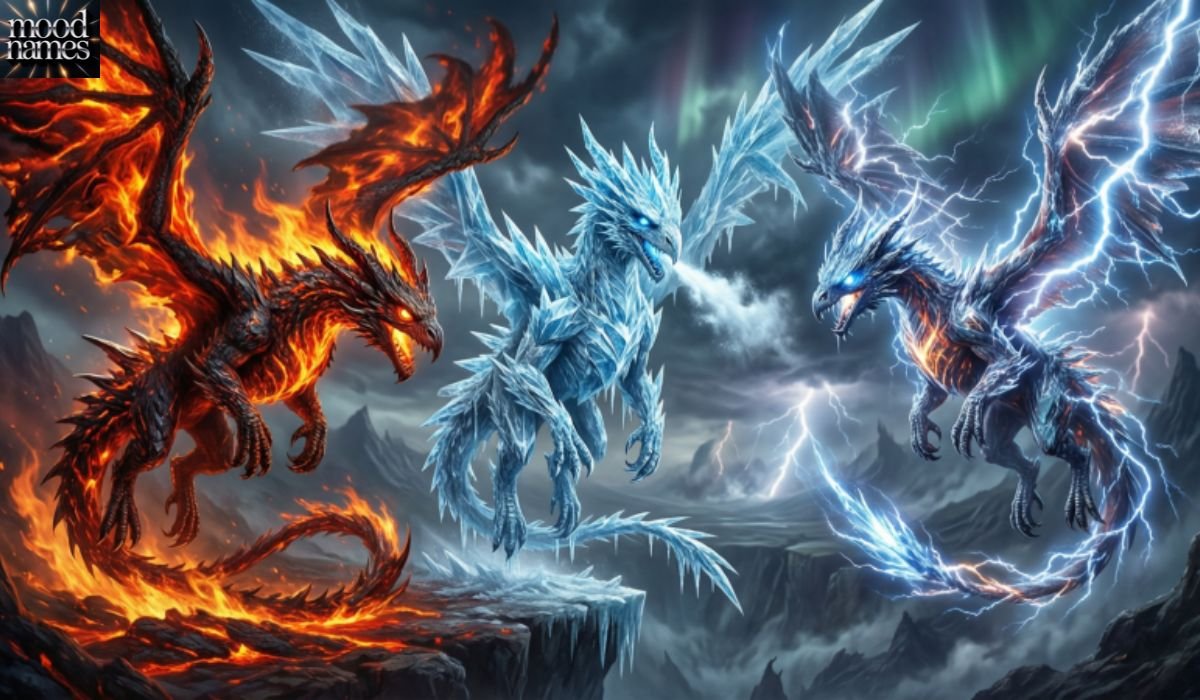
32 lightning wyvern names to try
Decide whether people named the wyvern after its appearance or after an encounter. Arcwing describes the outline of its lightning; Stormtalon suggests the damage it leaves behind. A creature known only by distant sightings might acquire several local names. Choose one main name for narration so readers can follow the story.
- Voltstrike
- Thundraclaw
- Zerithcrest
- Skyrlash
- Arcwing
- Veyronroar
- Stormspark
- Raskafang
- Kelthrift
- Rivexcoil
- Tarantalon
- Zyrabreaker
- Noxflash
- Istralscale
- Valkgale
- Aeronhowl
- Quillstrike
- Cirrusclaw
- Verrincrest
- Dravalash
- Voltwing
- Thundraroar
- Zerithspark
- Skyrfang
- Arcrift
- Veyroncoil
- Stormtalon
- Raskabreaker
- Kelthflash
- Rivexscale
- Tarangale
- Zyrahowl
A lightning wyvern becomes more interesting when its power has a limitation. Perhaps it stores charge only during storms or cannot release a bolt while carrying its rider. Build the name around the ability that observers notice, then reveal the limitation through action. These are invented worldbuilding ideas, not animal biology.
Five storm-wyvern encounter concepts
Use these story prompts to test whether a name carries the right character and atmosphere:
- A cliff-dwelling wyvern discharges sparks before taking flight.
- A wounded storm hunter is feared for the thunder heard after it passes.
- A courier bonds with a fast wyvern that refuses to fly in clear weather.
- A mountain village gives the creature a name based on a lightning scar.
- Two rival riders name their wyverns for different sounds in the same storm.
Names for a storm wyvern versus a fire dragon
Begin with a single design constraint: location, role, mood, or a defining object. For lightning wyvern names, choose one and write a one-line brief such as ‘someone known for keeping a dangerous promise.’ Generate five names from that brief, cross out the two that require pronunciation help, and test the remaining three in a real sentence. This process reduces accidental lookalikes and gives each name a reason to exist.
Using sound to suggest speed and voltage
Contrast public identity with private identity. A ceremonial name can be longer, but friends may use a short form. Readers need to recognize both versions without having to memorize two unrelated words. If a name already contains a striking image, avoid attaching another equally strong image that fights for attention. A calm suffix can make a dramatic opening sound more powerful.
Giving a lightning creature a believable weakness
Look at names already used in your project. If three major characters all begin with ‘V’ and end with ‘-ra,’ vary the rhythm before you draft further chapters. Use a handwritten roster or a small spreadsheet with spelling, syllables, narrative function, and first appearance. In shared worlds or multiplayer games, check platform rules and name availability before committing to a final choice.
What to test before choosing
Test the name as a rider’s shouted command, a villager’s warning, and a line on a map. Distinguish electrical abilities from fire, and avoid making the spelling too elaborate for action scenes.
Name a wyvern from its storm behavior
Start with this premise: a mountain wyvern that stores electrical charge in its wing spines before a storm. First choose the emotional register: speed, sharp consonants and crackling energy. Second pick an opening from this article—Zyra—because it will be easy to recognize. Third attach a grounded detail, such as rift, only if the world would naturally use descriptive family names or titles. Read Zyra rift aloud. If the scene is fast, the character may introduce themselves simply as Zyra.
Next write three one-sentence introductions: one said by a close friend, one by a stranger, and one by an adversary. Keep the name that sounds convincing in all three. This matters because a character name should work in action, not just on a list. If a stranger would ask for clarification every time, simplify the spelling and preserve the strongest syllable.
Frequently asked questions
What is a good lightning wyvern name?
Voltstrike, Arcwing, and Stormtalon suggest speed and electrical energy. Pick a shorter name for a game companion or a longer title for a legendary creature in a story.
Should a wyvern have a dragon-style name?
It can, if that suits your setting. Build the name around the creature’s defining feature, such as storm flight or crackling wing spines, and follow the creature conventions of your chosen fictional world.
Can these names work for a pet in a game?
Yes, as creative suggestions. Check the game’s naming rules, character limit, and availability before choosing one. The list does not claim that any handle is reserved or available.
How do I make a wyvern name sound dangerous?
Use a sharp sound and one concrete threat: a talon, sudden strike, or thunderous arrival. A readable name backed by a dangerous action is more convincing than several ominous words combined.
Related naming guides on MoodNames
For broader inspiration, see our Wyvern Names guide. For a different style of character, compare the Monster Names ideas.
Final thoughts
The strongest lightning wyvern names do not depend on stuffing a keyword into every heading or inventing a grand meaning for each syllable. Choose a style, collect a shortlist, test pronunciation, and connect the winner to something your character or project actually does. That approach gives readers usable inspiration and makes the guide worth returning to when they need a fresh variation.
Further reading
For more about the craft behind fictional names, read Sense and Serendipity: Some Ways Fiction Writers Choose Character Names by Sharon Black and Brad Wilcox. This is background reading, not the source of the invented suggestions above.