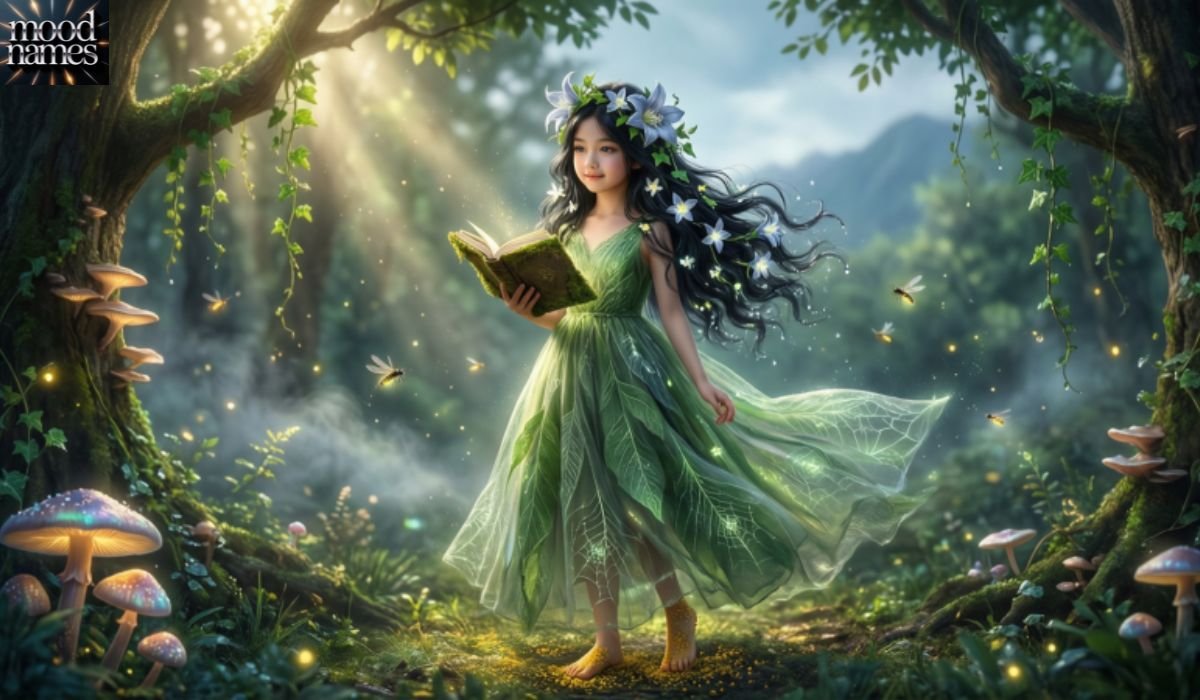
A nature fairy’s name can grow from the place they protect. A stream keeper may sound fluid and soft; a thorn-hedge guardian could use firmer consonants; a flower messenger might have a bright, short call name. These nature fairy names are meant for original stories, character sheets, and imaginative games. Rather than borrowing a supposed ancient meaning, choose a plant, season, habitat, or ecological role and let that detail shape the sound of the character’s name.
How to use this list: Pick a few names and test them in a scene, caption, or character introduction before making a final choice.
32 nature fairy names to try
Start with a habitat and a small responsibility. A river fairy could keep reeds from blocking a stream; a woodland fairy could carry seeds into a clearing. Match the name to that task. Leafsong suggests a different kind of magic from Rainwhisper, even if both characters live in the same valley.
- Alder Leafsong
- Poppy Brookglow
- Mira Fernstep
- Clover Dewbell
- Junia Mosswing
- Fern Petaldrift
- Raina Sunreed
- Linden Rainwhisper
- Basil Willowhush
- Elowen Thornbeam
- Sorrel Meadowmist
- Mallow Bloomtide
- Sienna Riverlace
- Iris Seedkeeper
- Tansy Branchlight
- Briar Leafsong
- Nola Brookglow
- Maris Fernstep
- Faye Dewbell
- Rowan Mosswing
- Alder Petaldrift
- Poppy Sunreed
- Mira Rainwhisper
- Clover Willowhush
- Junia Thornbeam
- Fern Meadowmist
- Raina Bloomtide
- Linden Riverlace
- Basil Seedkeeper
- Elowen Branchlight
- Sorrel Leafsong
- Mallow Brookglow
Use the season to make the name and costume feel connected. Petaldrift can suit spring, Seedkeeper suggests a later harvest, and Meadowmist feels appropriate at dawn. These are creative associations. Avoid presenting an invented combination as an authentic botanical translation or traditional folklore name.
Woodland roles that inspire fairy names
Give each name a story by connecting it to one of these specific situations:
- A seed messenger travels between groves after the first rain.
- A river fairy keeps fallen branches from blocking a fish passage.
- A meadow guardian is named after the season when flowers return.
- A mushroom tender lives beneath an ancient fallen tree.
- A cliffside fairy carries pollen across a windy valley.
Plants, seasons and landscapes as naming cues
Begin with a single design constraint: location, role, mood, or a defining object. For nature fairy names, choose one and write a one-line brief such as ‘someone known for keeping a dangerous promise.’ Generate five names from that brief, cross out the two that require pronunciation help, and test the remaining three in a real sentence. This process reduces accidental lookalikes and gives each name a reason to exist.
Soft sounds versus wild-sounding nature names
Contrast public identity with private identity. A ceremonial name can be longer, but friends may use a short form. Readers need to recognize both versions without having to memorize two unrelated words. If a name already contains a striking image, avoid attaching another equally strong image that fights for attention. A calm suffix can make a dramatic opening sound more powerful.
Giving a nature fairy a role in the ecosystem
Look at names already used in your project. If three major characters all begin with ‘V’ and end with ‘-ra,’ vary the rhythm before you draft further chapters. Use a handwritten roster or a small spreadsheet with spelling, syllables, narrative function, and first appearance. In shared worlds or multiplayer games, check platform rules and name availability before committing to a final choice.
Choosing a name that actually fits
Pick the fairy’s habitat, a task that matters to the ecosystem, and a sound pattern that matches their temperament. Keep invented combinations distinct from botanical names with known meanings.
Build a fairy name from a woodland task
Start with this premise: a river fairy tasked with returning stolen spring rain to a dry valley. First choose the emotional register: freshness, place and a gentle sense of magic. Second pick an opening from this article—Mallow—because it will be easy to recognize. Third attach a grounded detail, such as Willowhush, only if the world would naturally use descriptive family names or titles. Read Mallow Willowhush aloud. If the scene is fast, the character may introduce themselves simply as Mallow.
Next write three one-sentence introductions: one said by a close friend, one by a stranger, and one by an adversary. Keep the name that sounds convincing in all three. This matters because a character name should work in action, not just on a list. If a stranger would ask for clarification every time, simplify the spelling and preserve the strongest syllable.
Frequently asked questions
What are good nature fairy names?
Alder Leafsong, Poppy Brookglow, and Clover Dewbell offer different natural images. Choose a tree, flower, water, or seasonal theme that matches the fairy’s home and responsibilities.
Can I use flower names for a fairy?
Yes. Poppy, Iris, and Clover can serve as readable first names, with an invented second element adding a fairy mood. Distinguish botanical inspiration from any claimed historical name meaning.
How do I name a water fairy?
Choose a detail from the water she inhabits: reeds for a marsh, spray for a waterfall, or ripples for a quiet pond. A name such as Mira Rainwhisper suggests gentler magic than a title built around a flood.
How should I pick a fairy name for a child-friendly story?
Use familiar sounds, a short everyday name, and one clear visual detail. Test it aloud in a sentence a child might repeat, and avoid giving several characters nearly identical names.
Related naming guides on MoodNames
For broader inspiration, see our Fairy Names guide. For a different style of character, compare the Swamp Names ideas.
Final thoughts
The strongest nature fairy names do not depend on stuffing a keyword into every heading or inventing a grand meaning for each syllable. Choose a style, collect a shortlist, test pronunciation, and connect the winner to something your character or project actually does. That approach gives readers usable inspiration and makes the guide worth returning to when they need a fresh variation.
Further reading
For more about the craft behind fictional names, read Sense and Serendipity: Some Ways Fiction Writers Choose Character Names by Sharon Black and Brad Wilcox. This is background reading, not the source of the invented suggestions above.